.png)
BUNGALOW IN INDIA
Project Typology
Residential
Location
Chennai, India
Date
2018
Status
Concept
Area
525 m² (Building), 600 m² (Site)
Credits
ITHAKA – Design & Architecture Inc.
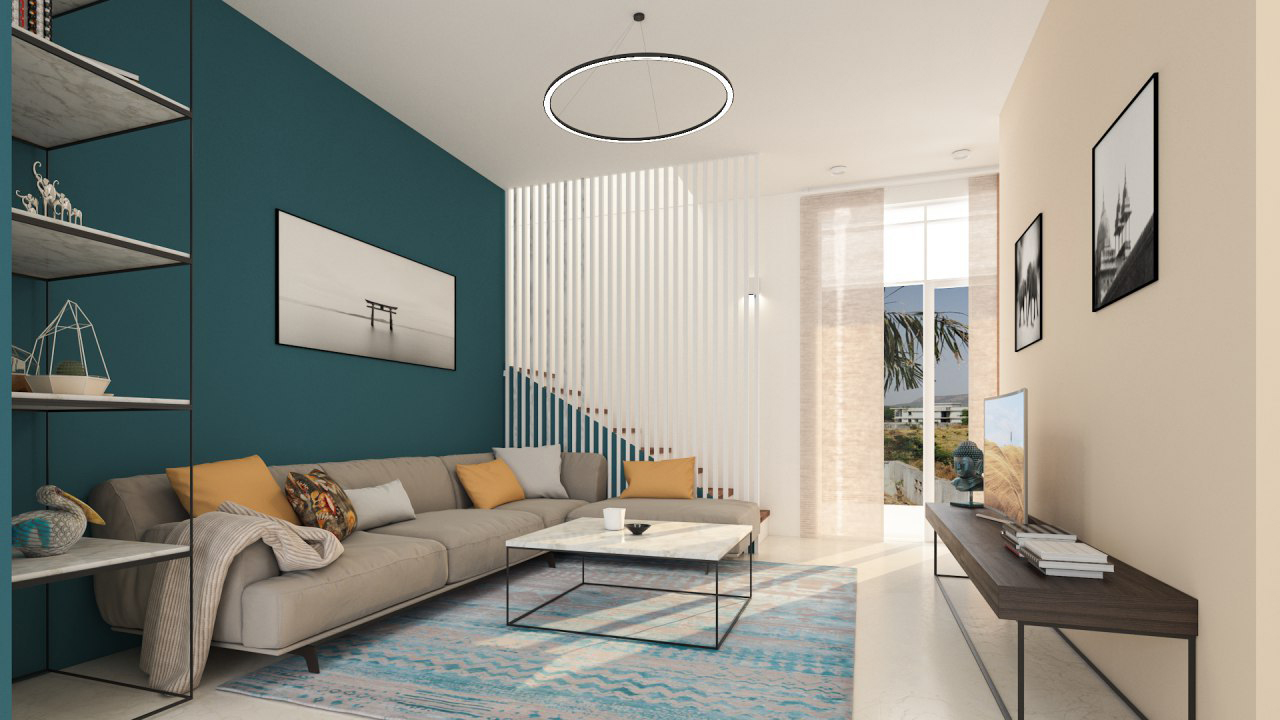
This contemporary two-story bungalow in Chennai showcases an advanced approach to climate-responsive tropical residential design. The 525 m² home is organized around a distinctive cross-shaped plan set within a square footprint, allowing balanced orientation and efficient room distribution. From concept to construction, the design prioritizes passive solar strategies, natural ventilation, and material durability suitable for India’s tropical environment.
Chennai’s climate ranges from 20.2°C to 37.7°C with high humidity and intense monsoon seasons. The architectural response addresses these conditions through strategic building orientation, deep shading consoles, and a passive airflow system that promotes cross-ventilation throughout the house. Specialized drainage and material choices ensure resilience during periods of heavy rainfall, while maximizing indoor comfort year-round.
The bungalow is built on a monolithic reinforced concrete structural frame supported by four primary columns. Perimeter consoles extending 3.3 meters create over 270 m² of shaded verandas and semi-open outdoor spaces—an essential feature for cooling in tropical climates. Internally, 7.8-meter spans allow flexible layouts and unobstructed room configurations, supporting both functionality and visual openness.
The load-bearing system uses a single-stage frame construction with precisely calculated beam dimensions to ensure stability and efficiency. A centrally positioned staircase reduces circulation distances and eliminates unnecessary corridor space. This planning strategy enhances spatial flow across both floors and improves natural lighting and ventilation in key interior areas.
The home incorporates environment-friendly and non-flammable materials, selected for performance in high-humidity tropical conditions. Locally sourced elements minimize transportation costs and environmental impact. Foam block walls, marble cladding, and aluminum glazing systems offer long-term durability, low maintenance requirements, and strong resistance to heat and moisture.
A flat combined roof system with internal drainage effectively manages monsoon rainfall, preventing water accumulation and structural wear. Heat-resistant glazing reduces solar gain while preserving daylight quality. All construction and safety elements meet Indian building standards, ensuring robust structural performance and long-term reliability in tropical environmental conditions.